“Gotta love a Georgian townhouse, eh?” you shout, slapping the brick entranceway and attempting a stride towards your friend’s promise of housewarming nibbles inside. “It’s actually Victorian” mumbles your friend, squeezing along the narrow hallway to take your coat. The next thirty minutes you eat your way through their salmon puffs and your words.
Knowing the period of your property (and that of your friends) helps serve a better understanding of it’s worth, with a side order of more insightful housewarming chat.
North London in particular is brimming with period architecture, ripe for identifying and discussing at length over a canapé or two. Find out what’s going on beyond your own stucco fronting before you trip up over your friend’s.
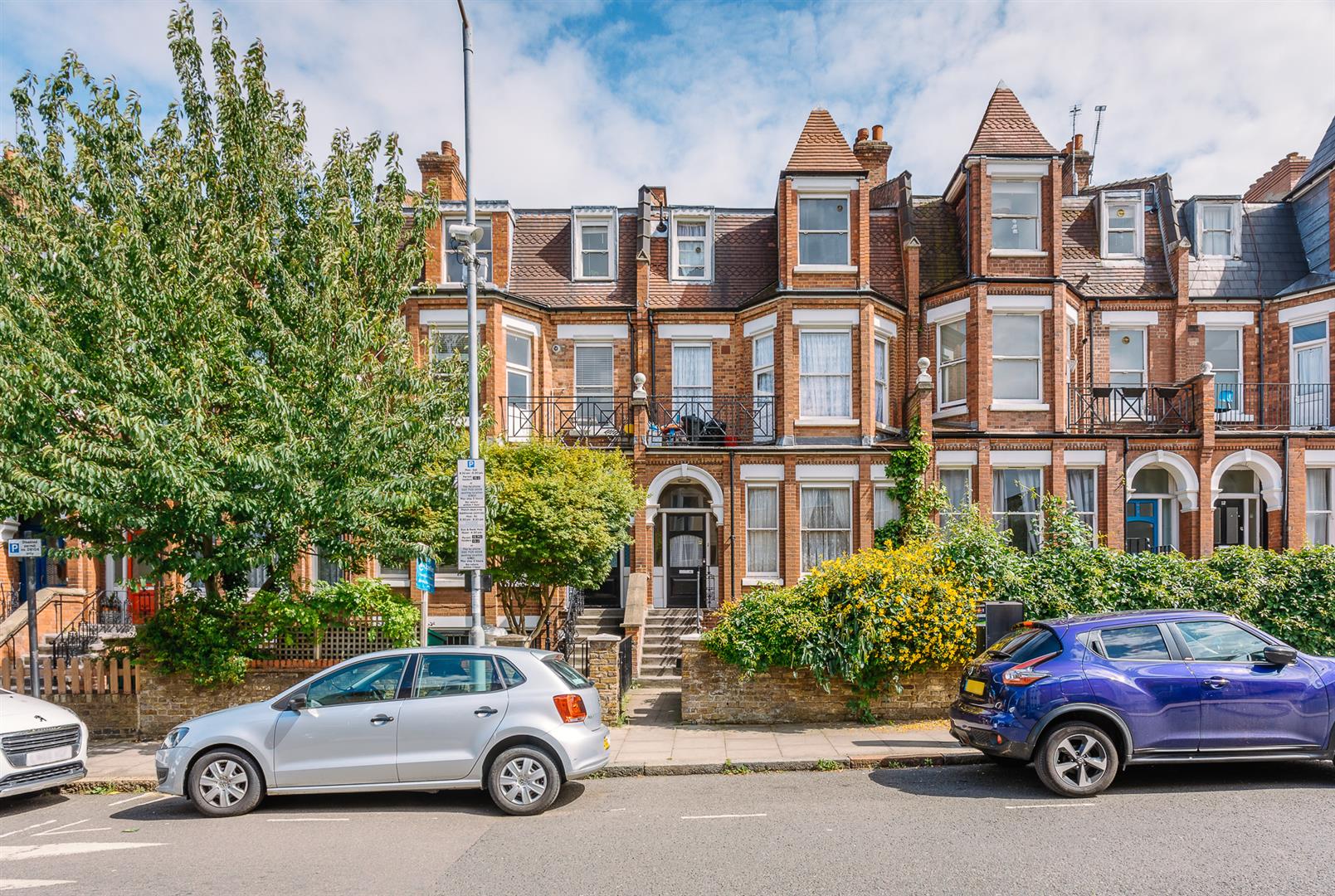
Georgian Cheat Sheet
1714 – 1830 (late Georgian 1830 – 1837)
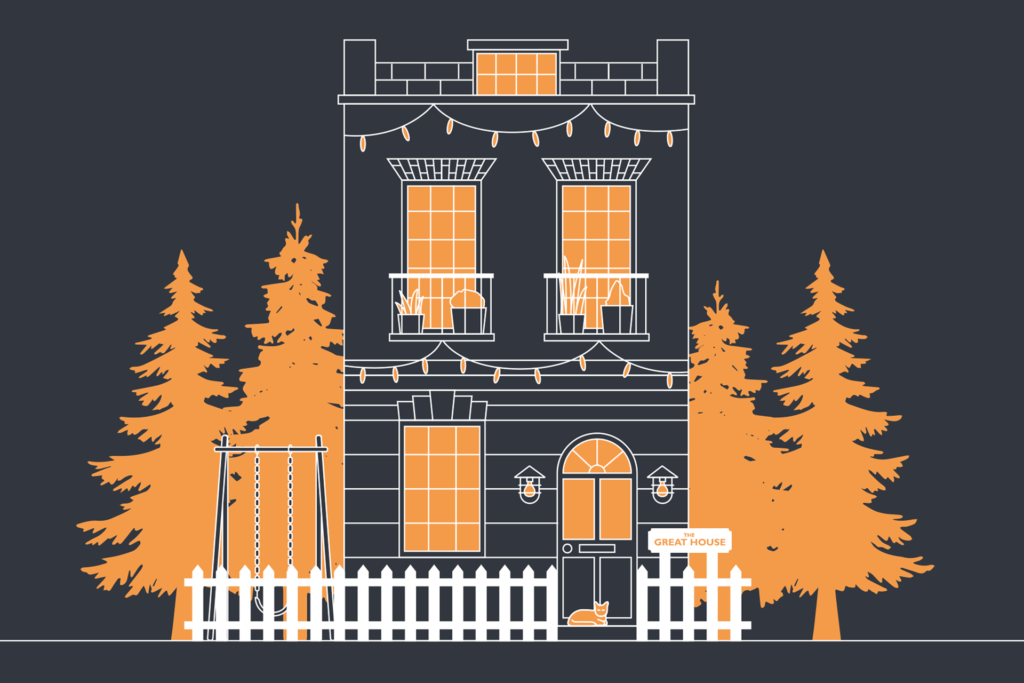
How tall is it? Georgian properties usually span three to four stories, with the first two boasting higher ceilings and larger windows than the top floors which were built for the staff. The ‘family’ rooms will be spacious, deep and symmetrical.
Putting on a front? You will often find the first story stucco fronted and painted white or cream, while the rest is left as exposed brickwork.
Pane in your glass? Speaking of bricks, an interesting characteristic of Georgian properties are the odd bricked up window – a not so subtle bid to avoid the window tax from 1696 – 1851. Yes, you thought bedroom tax was unfair. The non bricked, as we shall now refer to them, are usually tall sash windows with six to nine panels on the lower stories and small panelled windows on the top.
Where’s the oven? Inside, if you’re struggling to locate the kitchen that’s another sign you’ve wandered into a Georgian property and/or somebody else’s home. Kitchens are usually found separate from the main house on the lower ground floor, sparing you the inconvenience of hearing your dinner being made by lowly servants. Phew.
How does your garden grow? Outside you’ll be in good (hopefully) company, as these houses were built in a square around a shared garden. Georgian houses do not have their own, private gardens.
Porch story? Not so much a porch as a rounded archway over the front door.
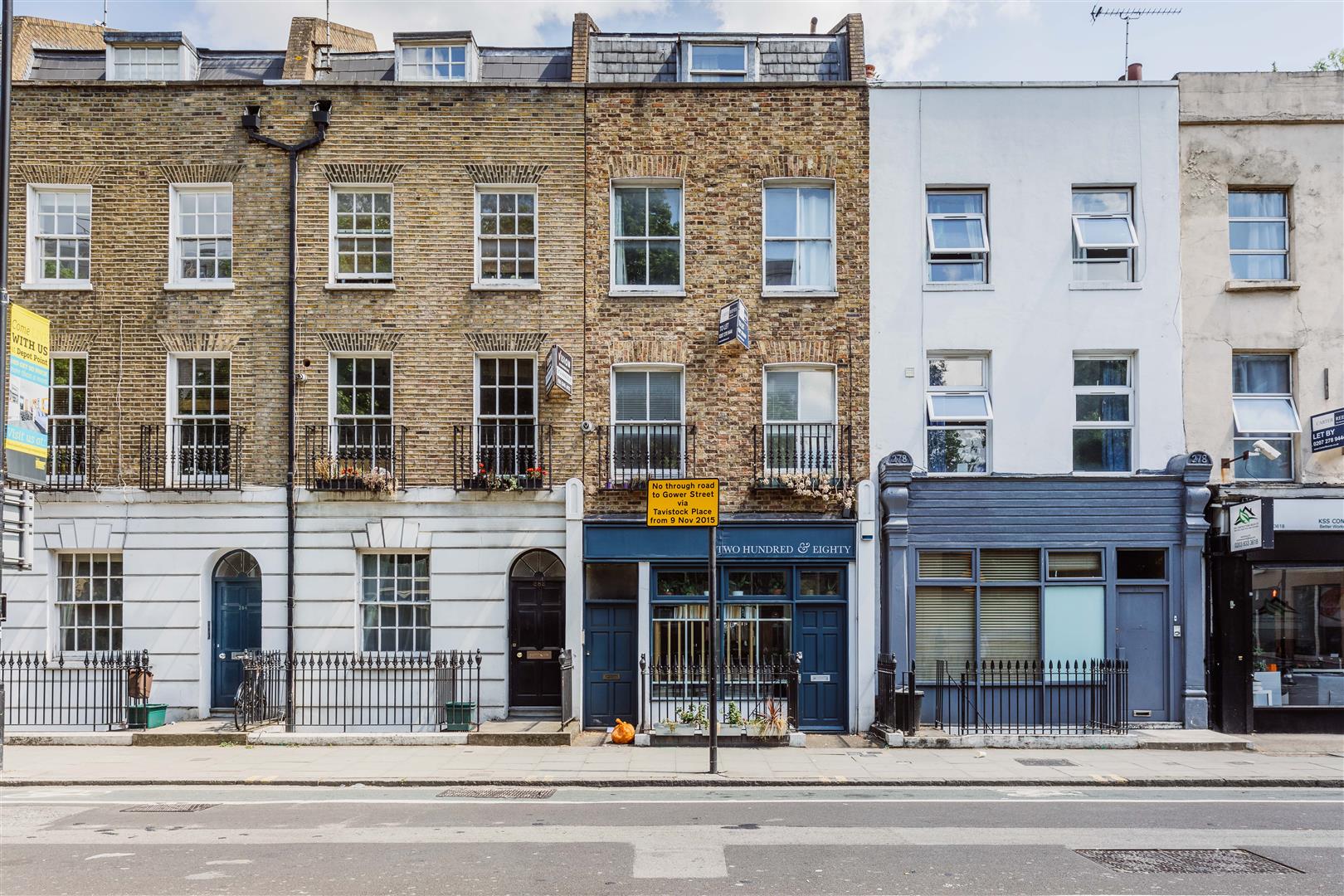
Victorian Cheat Sheet
1837 – 1901
How tall? Victorian townhouses are usually built in rows and on two floors with high pitched roofs, along narrow streets.
Putting on a front? Coloured brickwork and terracotta is the giveaway of late Victorian property, and ornate roof trims. Snazzy. Early Victorian housing will have plain brick exteriors (sometimes stucco fronted) and sash windows. Not so snazzy.
Pane in your glass? Bays for days. Victorian windows are usually large, wide and ready for setting up camp in. Designed for reading / studying (I imagine), these bay windows are now primarily used for dog lounging / spying.
Where’s the oven? Along a narrow, geometric tiled hallway and past flowery peeling wallpaper, the Victorian kitchen will usually be found out the back sporting stained glass windows.
How does your garden grow? Narrow, stripped and to the side if you must know. Most Victorian terraced houses have what’s known as a ‘side return’ which isn’t actually a Bluetones remix, no. It is in fact a thin strip of outside space that spans along the back extension. Or what’s also known in our industry as, neat and full of potential.
Porch story? Yes, but think brick!
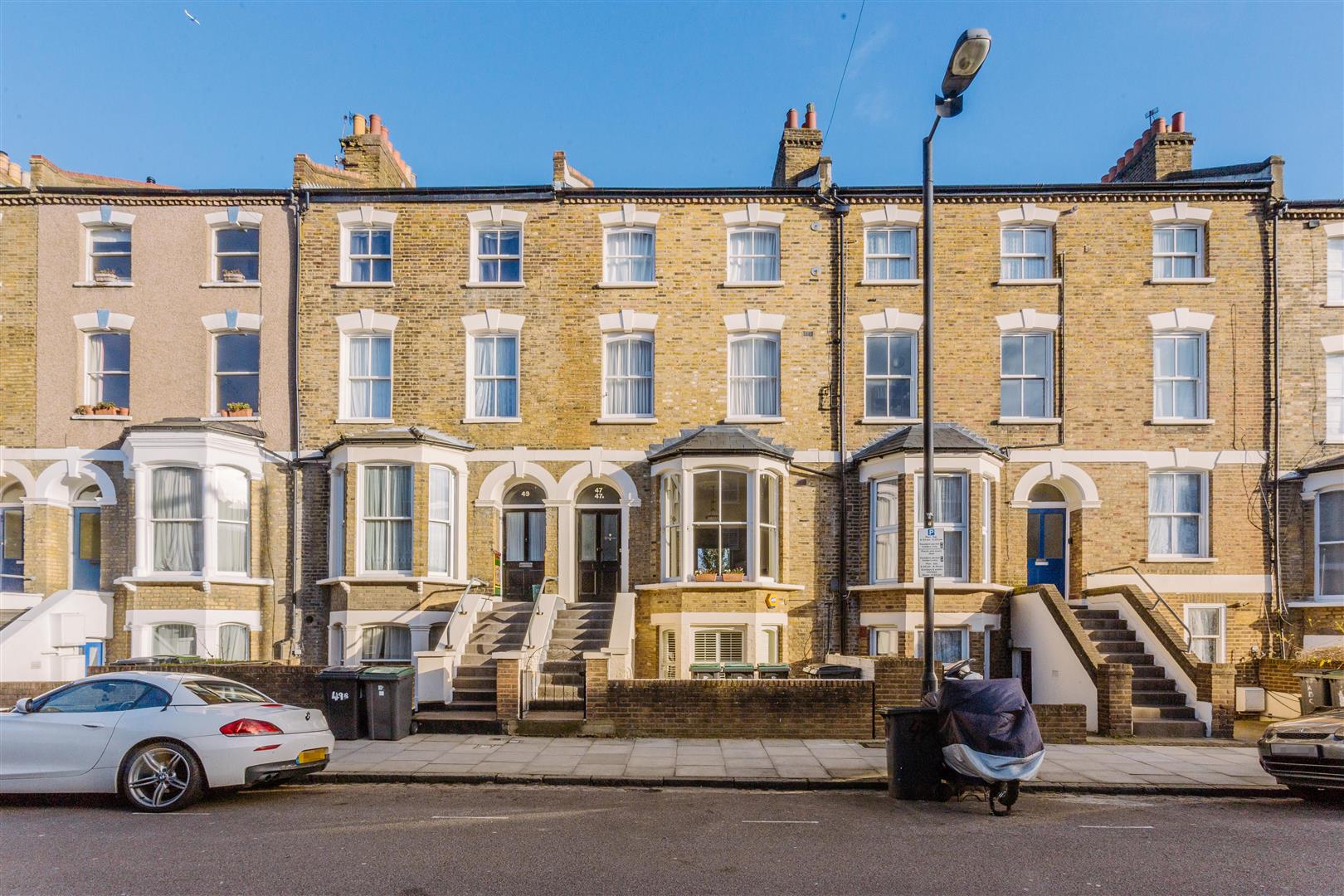
Edwardian Cheat Sheet
1901 – 1910
How tall is it? These properties are more for the chubby chasers among us. ‘Short, squat and roomy’ would read their Tinder profile. #thicc
Putting on a front? You might find yourself walking through a front garden to get to their doorbell, as it were, adorned with mock Tudor cladding and red brickwork. Edwardian homes are usually set back from the pavement for extra privacy. Shyness is nice.
Pane in your glass? Yes! And lots of them. These greedy living rooms often boast windows on both ends.
Where’s the oven? Usually near the living room, after a breezy walk through a wide hallway along parquet wooden flooring. The kitchen floor will often be tiled and the doors may even display some stained glass just for fun.
How does your garden grow? Probably quite substantially. Edwardian homes were built in the suburbs where there was more land. Think ‘The Good Life’ and don a pair of dungarees for good measure while you tend to the cabbage patch.
Porch story? Yes, with a wooden frame (not brick). You’re welcome.
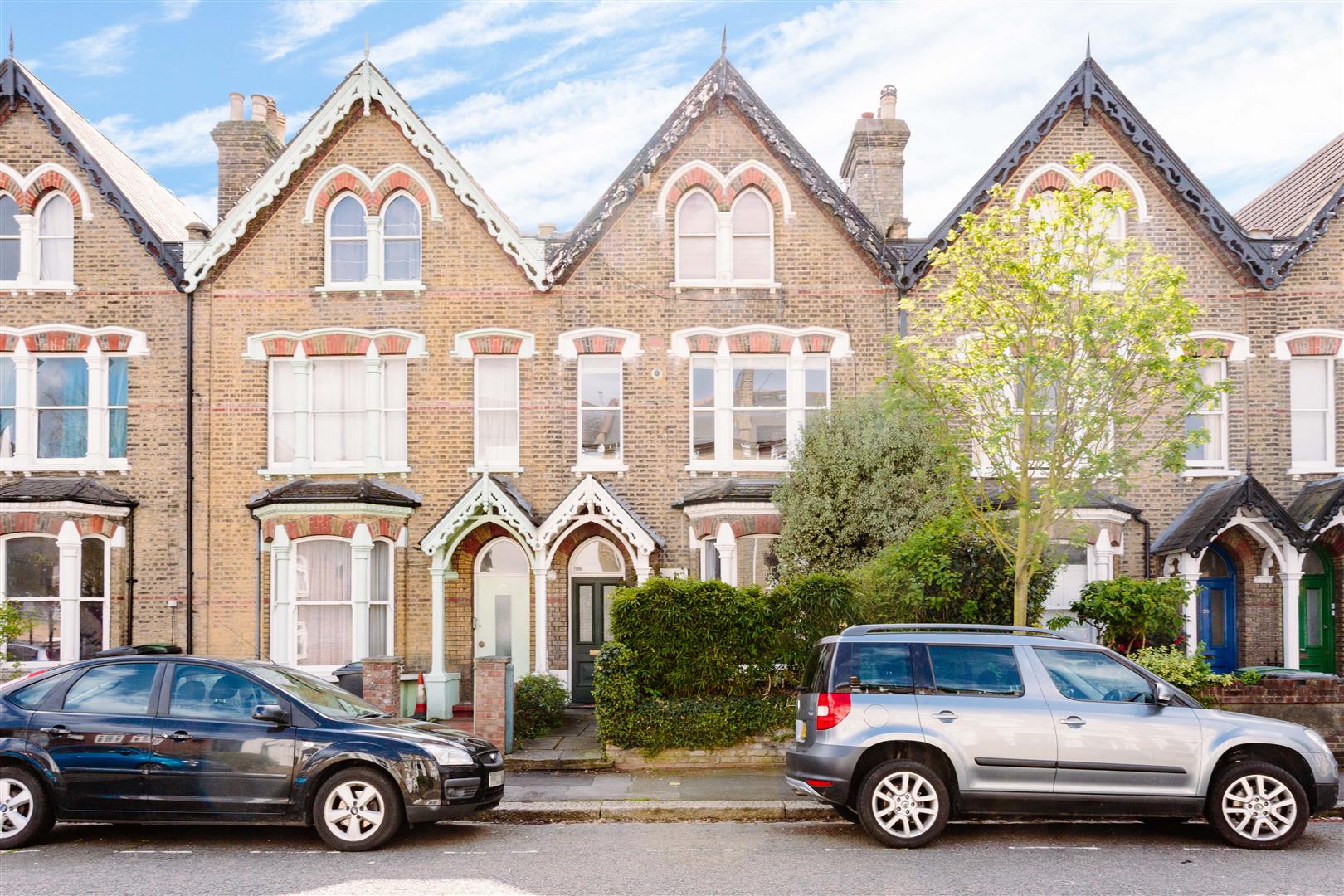
All this talk of Period properties got you in the mood to search for your own Georgian Townhouse- we have a veritable smorgasbord of period properties to peruse at www.daviesdavies.co.uk, or get in touch.
Contact us:
mark@daviesdavies.co.uk – Sales Director (contact for sales, lettings and new homes)
katrina@daviesdavies.co.uk – Director of Property & Block Management (contact for property and block management)
Davies & Davies Estate Agents, 85 Stroud Green Road, London, N4 3EG
Article & images by Barefaced Studios
You might also want to read other useful blog articles by clicking here.
Please note that all content contained within our website is for informational purposes only. You should not construe any such information or other material as legal, tax, investment, financial, or other advice. All Content on this site is information of a general nature and does not address the circumstances of any particular individual or entity. We advise seeking professional advice from a legal, financial, or other professional.
There’s something reassuringly straightforward about selling a conventional home. Three bedrooms, a good-sized garden, a recently renovated kitchen, close to the station – buyers can quickly understand what’s on offer. But what if your home is a little harder to sum up? Perhaps it’s a Victorian apartment packed with original features. A colourful, design-led home that looks nothing like the property next door. A former industrial building with an unconventional layout. Or simply a house where years of thoughtful renovation have created something with a personality all of its own.
Read More...
When you’re buying a home with young children, it’s very easy to shop for the life you have right now.
A spare bedroom becomes the nursery. The small garden seems enormous to a toddler. Being twenty minutes from school doesn’t sound too bad when you’re still thinking in terms of pram walks and nursery drop-offs. But children have an inconvenient habit of growing.
Selling your first home is an exciting milestone, but if you’ve never done it before, it can also feel like stepping into the unknown.
You know you need an estate agent, a solicitor and a buyer, but what actually happens before your property goes on the market? How do you know what your home is worth? What documents will you need? And how do you choose an estate agent that’s right for you? The good news is that a little preparation at the start can make the whole process far smoother. From understanding your finances to gathering important paperwork, here’s everything worth getting organised before you put the ‘For Sale’ board up.
Get in Touch
Opening Times
Mon – Thurs: 0900 – 1815
Fri: 0900 – 1800
Sat: 1000 – 1600
Sun: Appointments by request